REVIEW · PRAGUE
Best of Prague Architecture – private tour with PERSONAL PRAGUE GUIDE
Book on Viator →Operated by Personal Prague Guide · Bookable on Viator
Architecture in Prague is a lesson you can walk. This private, guide-led route connects Gothic, Baroque, and Art Nouveau in a way that feels instantly practical, not like memorizing postcards. I like that you get a personal pace (and a chance to ask real questions), plus the itinerary aims for hidden, less-obvious corners near the big names. One thing to consider: several major sights here have entry fees, so your final cost depends on which interiors you choose to pay for.
The best part is how the tour turns famous buildings into street-level stories. You’ll move through the Old Town’s architectural mix, then pivot to the city’s 20th-century and Art Nouveau identity, with the guide steering you toward the viewpoints and angles most people miss. If you want architecture as a walkable timeline, this tour makes it easy to see what changed and why.
In This Review
- Key highlights worth your time
- Private Prague Architecture: how a personal guide changes the whole walk
- Prague Castle and Saint Vitus Cathedral: Gothic scale without the chaos
- Loreta Praha: Baroque devotion and the choice to enter
- Wallenstein Palace Gardens: Baroque wealth with a breather built in
- Charles Bridge and Klementinum: statues, legends, and a cinematic feel
- Old Town Square: the 3D textbook of Prague styles
- Church of Our Lady before Týn: Gothic twin spires and Tycho Brahe
- Wenceslas Monument: 20th-century architecture at city scale
- Obecní dům (Municipal House): Art Nouveau drama you can read at arm’s length
- Old Town Hall and the Astronomical Clock tower: views plus the hourly show
- Price and what you’re really paying for in a 3-hour private tour
- Who should book this tour (and who should skip it)
- Final call: should you book Best of Prague Architecture with a personal guide?
- FAQ
- How long is the Best of Prague Architecture private tour?
- Is this tour private or shared?
- What language is the tour offered in?
- Is pickup included?
- Do I need to buy tickets for Prague Castle and other interiors?
- Is Loreta Praha included inside, or do I pay if I want to enter?
- Are Charles Bridge and Old Town Square free to visit?
- What’s the cancellation policy?
Key highlights worth your time
- Private guide, not a group shuffle: You can adjust what you focus on and get answers in real time.
- Architecture from multiple centuries, in one route: You’ll jump from Gothic landmarks to Baroque sites and Art Nouveau facades.
- Prague Castle area shortcuts and quieter lanes: The tour includes less-touristy walking around the castle zone.
- Charles Bridge with story details: Statues, towers, and legends (including the mortar-and-eggs construction tale).
- Astronomical Clock timing is built in: You’ll be in position for the hourly show and its famous apostle display.
- Two Art targets beyond the usual spots: Obecní dům (Municipal House) and Wenceslas Monument expand the timeline.
Private Prague Architecture: how a personal guide changes the whole walk
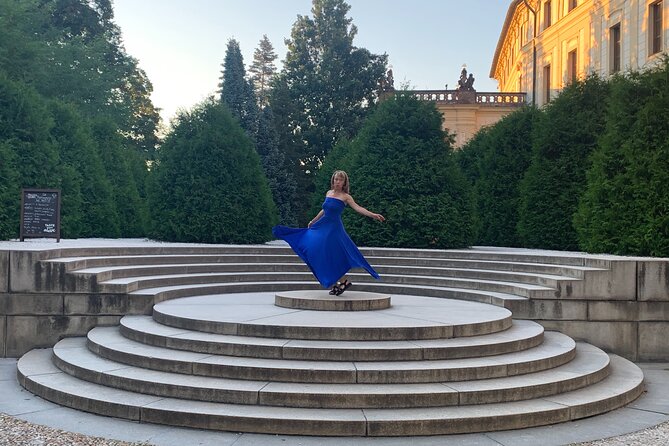
Prague is packed with iconic sights, but most architecture walks turn into a race. This one keeps things calmer because it’s private—your group only. That matters when you’re trying to notice details like tower shapes, facade rhythms, and how different eras reuse older ideas.
I also like that the tour is built around comprehension. The guide doesn’t just point at buildings; they explain what you’re looking at and how it relates to Prague’s power shifts and tastes. In real tours, this is the difference between seeing a cathedral and understanding why it looks the way it does.
A small practical consideration: the walking can still add up because you’re covering several districts on foot in about 3 hours. If you tire quickly, bring comfortable shoes and don’t hesitate to ask for pacing adjustments during the walk.
You can also read our reviews of more tours and experiences in Prague.

Prague Castle and Saint Vitus Cathedral: Gothic scale without the chaos
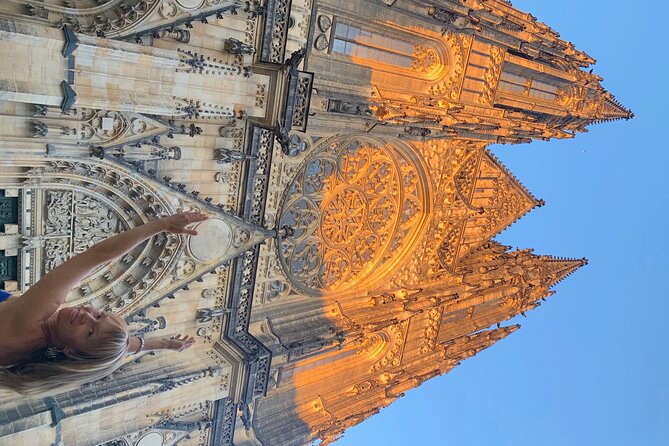
Your tour starts at Prague Castle, with time set aside for the area around St. Vitus Cathedral and nearby architectural treasures. St. Vitus is the Gothic centerpiece, and the guide’s job here is to help you read the building as a whole: proportions, vertical emphasis, and the way the cathedral anchors the castle complex.
This is also where your guide can steer you toward the kind of views that make the rest of the city feel more connected. On a walking day, the castle zone is where you begin to see Prague as one big architectural argument—religion and politics layered over centuries.
Expect about 30 minutes in this first stop area. Admission for the cathedral area is not included, so if you want interiors, plan ahead for tickets.
Loreta Praha: Baroque devotion and the choice to enter
Next comes Loreta Praha, a Baroque Marian pilgrimage site with a church setting that feels both ornate and purposeful. You’ll see the Baroque Church of the Nativity and the replica of the Holy House, plus the cloisters and surrounding chapels.
Here’s a smart detail: the tour typically does not go inside everything. The itinerary notes you can decide whether to pay an entry fee (about 10 USD) to see interior treasures. That’s your cue to match the tour to your preferences—if you love interiors, you’ll probably want to add it.
Even if you don’t enter, Loreta is worth the stop because the architecture is the story. The outside gives you the Baroque tone, and the surrounding spaces help you understand how religious architecture was designed to guide movement and attention.
Wallenstein Palace Gardens: Baroque wealth with a breather built in
Then you get a change of pace at Wallenstein Palace Gardens. This is tied to the life of Albrecht von Wallenstein, one of the most powerful and wealthy Czech nobles, and today the complex connects to the civic world as the seat of the Czech Senate.
In summer, the gardens are open to the public and free of charge, which is a nice bonus on a tour that includes paid entries elsewhere. Even with only about 10 minutes, you’ll benefit from the “pause” factor. Architecture is easier to notice when you’re not constantly stepping over crowds.
This is a good stop if you like Baroque planning—formal layouts, transitions from palace to garden, and the idea of power made visible through space.
Charles Bridge and Klementinum: statues, legends, and a cinematic feel
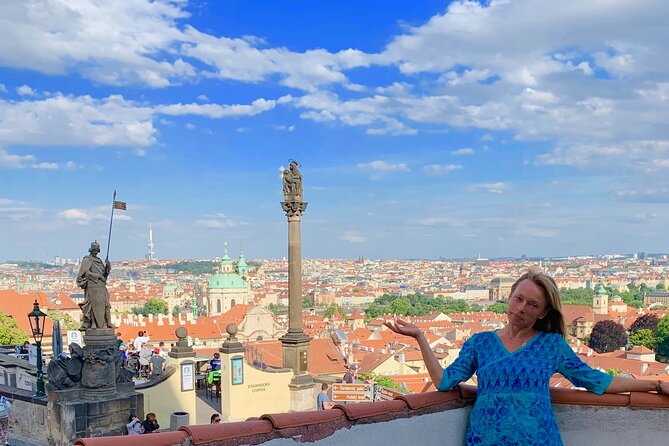
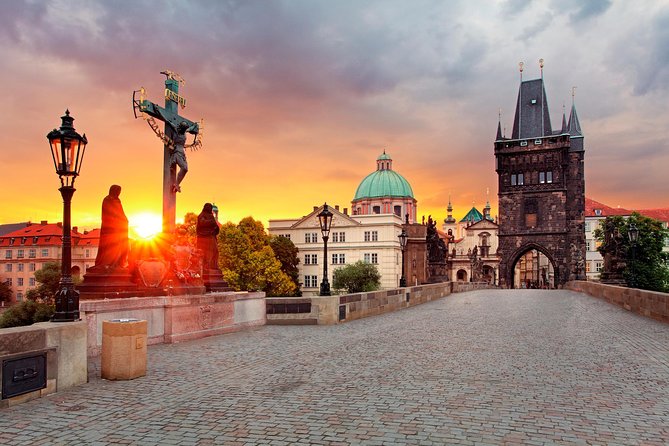
Charles Bridge is the postcard moment you actually want, and the tour treats it that way. You’ll stroll across Prague’s oldest bridge, famous for its 30 statues and the striking Gothic tower at the bridge. It dates back to 1357, and there’s a legend involving eggs mixed into the mortar that gets folded into the story of how the bridge was built.
You’ll also hear the playful local tradition about the five-star spot people touch to make a wish. It’s the kind of detail that turns a landmark into something you can participate in, not just observe.
A bonus cluster sits near the bridge:
- The Prague Venice area and Devil’s Stream side channel
- The John Lennon Wall, known as a symbol of anti-communist protest
- At the bridge’s end, Klementinum, a former Jesuit college now serving as the National Library
This part is especially useful because you’re not just walking across a bridge—you’re linking different layers of Prague life. Even if you know the cinematic association, it works better when you see how the bridge connects the city’s “center of gravity” to the next architectural zone.
Time here is about 15 minutes, and the stop is listed as free, which helps keep the budget predictable.


Old Town Square: the 3D textbook of Prague styles
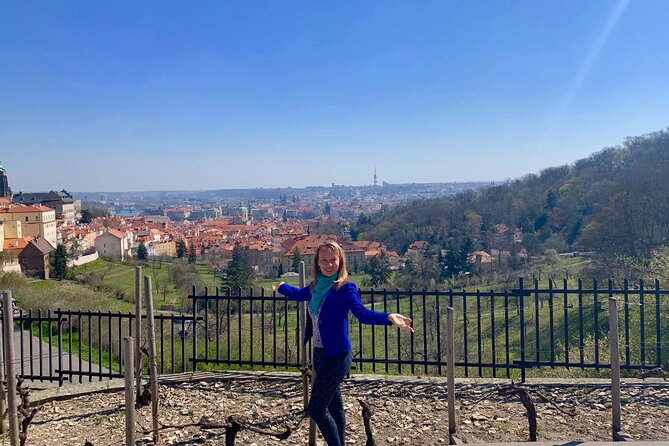
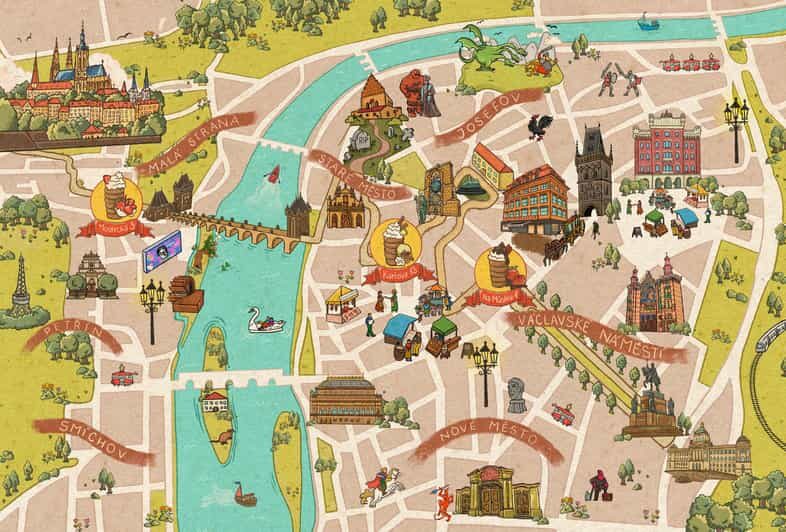
After the bridge, you step into the heart of the Old Town at Staroměstské náměstí (Old Town Square). This is where the city’s architecture feels like a visual timeline packed into one place.
The guide points out the main players:
- St. Nicholas Church, described in a Baroque style with a cake-like, decorative look
- Kinský Palace, praised for its rococo facade
- The House at the Stone Bell, tied to Gothic character
- The Church of Týn, with its spiky-topped silhouette that becomes a landmark from multiple angles
The square is also dominated by the Jan Hus Statue and the Old Town Hall, including its WWII damage context. And yes—the famous Astronomical Clock is a central moment. You’ll be right where the hourly show happens: the Twelve Apostles process appears in windows, and a skeleton feature rings as part of the spectacle.
One detail I like is that the tour doesn’t skip the darker layer. You’ll be shown the execution place marked by crosses, which keeps the square from feeling like a pure fairytale stop.
You may also be able to visit the Town Hall tower for panoramic views. The itinerary notes access by lift, which can be a big deal if stairs are not your thing.
This stop is listed as free for entry to the public areas, but tower access may require an admission ticket depending on what you choose.
Church of Our Lady before Týn: Gothic twin spires and Tycho Brahe
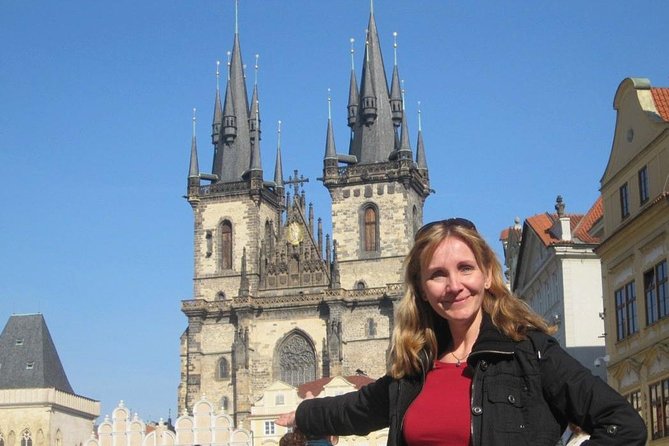
Next is Church of Our Lady before Týn, one of Prague’s most recognizable Gothic buildings. The key visual is the twin spires, which you can spot from many directions across the Old Town.
The tour also gives you one of the more “you’ll remember this” facts: the Danish astronomer Tycho Brahe is buried in this church. That’s a good reminder that architecture isn’t just religious or political—it’s also a container for scientific legacy.
This stop is brief (about 15 minutes) and listed as free. That makes it an easy win, especially if you want Gothic presence without another paid interior.
Wenceslas Monument: 20th-century architecture at city scale
From medieval Prague, you jump to a symbol of the 20th century at Wenceslas Monument. This stop is intentionally shorter (about 15 minutes), and the goal is less “museum visit” and more “understand what Prague chose to project later.”
If you only see the Old Town, you can miss how architectural style also tracks political and social priorities. This is your chance to reset your brain and compare centuries, not just buildings.
The monument area is listed as free, which is helpful when you’re paying for cathedrals and clock towers elsewhere.
Obecní dům (Municipal House): Art Nouveau drama you can read at arm’s length
Then comes Obecní dům (Municipal House), often considered the best Art Nouveau facade you’ll see in Prague. The key idea is the building’s intentional theatricality: monumental facade composition, allegorical figures, and lots of floral and decorative detail.
What makes this stop more than a pretty facade is the civic purpose behind it. This building houses Smetana Hall, a celebrated concert venue tied to the Prague Spring festival. So the architecture isn’t just decoration—it’s built to host important public culture.
Admission is listed as not included, so if you want to go inside, you’ll need to plan for tickets on your own.
Time is around 10 minutes, which means you should take the first couple minutes just to look. Then let the guide point out how different parts of the facade interact—figures, ornament, and classical elements blended into a single display.
Old Town Hall and the Astronomical Clock tower: views plus the hourly show
Finally, you circle back to Old Town Hall and the Astronomical Clock area for the tower experience. The clock itself is the famous side show, but the tower is where you get your payoff in terms of perspective.
The itinerary notes you can access the tower by stairs or elevator, and you’ll be able to take in views over the Old Town. The hourly apostle display is described as appearing when the clock strikes the hour, so timing matters.
The admission ticket for the tower is listed as not included, so treat this as an add-on choice. If you want maximum value for your time, consider pairing a quick clock watch with the tower. If not, you can focus on what you can do for free around the square and save your budget for another paid interior elsewhere.
Price and what you’re really paying for in a 3-hour private tour
At $112.46 per person for about 3 hours, this is not the cheapest way to see Prague architecture. But it’s priced like what you’re getting: a private guide, in English, with a route built around multiple eras and with pickup offered.
Here’s how I’d think about value:
- If you’re one person, private tours often cost more than group walks. You’re paying for flexibility and personal attention.
- If you’re two or more, the cost usually feels more reasonable because the guide becomes a shared resource.
- If you care about how to see, not just what to see, the explanation time is where the money goes.
Also keep in mind that many key stops list admission not included, so your total day cost can rise if you choose interiors like the castle area, the Loreta entry option, Obecní dům, or the Old Town Hall tower.
Who should book this tour (and who should skip it)
Book it if you want:
- A private architecture lesson that moves at a human pace
- A guide who can tailor focus, especially around the castle and Old Town zones
- The chance to ask questions and get clarity fast while you’re standing in front of the buildings
This is especially appealing if you like both the famous icons (Charles Bridge, Old Town Square) and the in-between streets and side areas. One guide experience that comes through strongly is how guides like Jana and Betty can help you get oriented quickly and point you toward smaller alleys and less crowded angles around the castle zone.
Skip or consider another format if:
- You want a self-guided route with no explanation time
- You’re trying to minimize paid entries, because several stops here are listed as not included
- You’re only interested in one neighborhood. This tour is built for a wider architectural sweep.
Final call: should you book Best of Prague Architecture with a personal guide?
If you want architecture that actually makes sense, I’d book this. The private format makes it easier to slow down, compare eras, and understand what you’re seeing while you’re still in the right spot.
If budget is tight, you can still make this work by choosing the free parts confidently and only paying for the interiors you care about most—especially since Loreta and the tower options are clearly presented as choices.
FAQ
How long is the Best of Prague Architecture private tour?
The tour lasts about 3 hours.
Is this tour private or shared?
It’s a private tour/activity, so only your group participates.
What language is the tour offered in?
The tour is offered in English.
Is pickup included?
Yes. Pickup is offered from the reception of your hotel or the street door area of your Prague apartment.
Do I need to buy tickets for Prague Castle and other interiors?
Admission tickets are not included for Prague Castle and other listed paid stops. Some areas are free, but several major interiors require tickets.
Is Loreta Praha included inside, or do I pay if I want to enter?
The tour usually does not enter, but you can decide to pay an entry fee (about 10 USD) to see interior treasures.
Are Charles Bridge and Old Town Square free to visit?
Yes. Charles Bridge is listed as free, and Old Town Square is also listed as free.
What’s the cancellation policy?
Free cancellation is available up to 24 hours in advance for a full refund.