REVIEW · PRAGUE
Back In Time: Zážitkové muzeum historie
Book on GetYourGuide →Operated by Máj - House of Fun · Bookable on GetYourGuide
Prague history, with a pulse. Back In Time Prague is a hands-on way to connect the big names you see around the city with scenes you can actually walk through. You’ll move through key chapters of Czech history—from medieval Prague to the legend of the golem—using modern tech and set pieces that aim to make the past feel immediate.
I especially like the interactive exhibits that turn themes like Libuše and the astronomical clock into something visual and story-shaped. And I like the built-in 5D cinema, because it adds adrenaline without turning the visit into a lecture.
One possible drawback: if you’re craving long, detailed explanations for every topic, you may wish for more depth than this 1-hour format can provide.
In This Review
- Key Highlights You Should Not Miss
- A 1-Hour Time Machine Through Prague’s Key Eras
- Interactive Exhibits That Make Stories Feel Real
- The Golem Legend: Prague’s Myth With Real Personality
- Libuše and the Founding of Prague: A Character-Driven Origin Story
- King Charles IV and the Astronomical Clock Story
- Prague Uprising: History With Emotional Weight
- Hall of Fame and “Secrets of Prague” Framing
- The 5D Cinema: Adrenaline, Timing, and Who Should Skip It
- Price and Timing: Is $18 Worth It?
- Who This Museum Fits Best: Families, Schools, and First-Time Visitors
- Should You Book Back In Time Prague?
- FAQ
- How long is the Back In Time Prague experience?
- What’s included in the ticket?
- What are the age and height limits?
- Who should not enter?
- Is the experience wheelchair accessible?
- What’s the cancellation policy?
Key Highlights You Should Not Miss
- Time machine experience that helps you frame Prague’s history as a journey, not a list
- Legend of the golem and other story-driven scenes that work especially well for younger visitors
- Libuše and the founding of Prague presented in a memorable, character-based way
- King Charles IV and the real-life feel of who he was and why he mattered
- Astronomical clock story focused on what’s behind the famous landmark
- 5D cinema with adrenaline that makes the ending feel like an event
A 1-Hour Time Machine Through Prague’s Key Eras
Back In Time Prague is built to be fast, focused, and family-friendly. With a 1-hour visit, you’re not signing up for a slow museum marathon—you’re signing up for a guided-feeling experience where each room pushes you toward the next big chapter of the city.
The biggest value here is context. If you’ve walked Prague’s streets before, you already know how many statues, bridges, and towers sit there quietly. This place helps you put meaning behind them, so the city’s history stops being names on plaques and starts feeling like cause-and-effect. It’s also a good intro when you don’t yet know where Czech history fits into the broader European story.
You also get a mix of formats. Some parts are interactive and scene-based; others rely on technology. That variety keeps energy up, which matters when you’re traveling with kids—or when you want something history-related that doesn’t turn into a nap.
You can also read our reviews of more tours and experiences in Prague.



Interactive Exhibits That Make Stories Feel Real
The museum’s core promise is simple: you’ll see Prague’s history as scenes you can step into, not just text you can read. The experience uses interactive exhibits and “authentic” looking setups to bring different periods to life, including the Middle Ages and the Renaissance.
Here’s what that means in practice. You’re not just hearing about a legend or a political moment—you’re experiencing it as a sequence of visuals and prompts. That’s why it works well for schools too: it gives students a shared experience they can later connect back to classroom discussion.
You’ll also spend time in a couple of standout themed areas. These aren’t random add-ons. They’re the kinds of Prague stories people remember because they’re specific and cinematic: myth, leadership, science, and uprising.
The Golem Legend: Prague’s Myth With Real Personality
One of the included highlights is the legend of the golem. Even if you only know the golem story in broad strokes, this kind of exhibit does two useful things. First, it gives the legend a setting you can picture. Second, it reframes the tale as part of Prague’s identity, not just a spooky folktale.
For many kids (and adults who act like they’re too cool), myth is an easier doorway than dates. A golem story gives you characters and conflict, which makes later history topics easier to follow. You can then look at Prague with fresh eyes, noticing how often the city leans into imagination as a way to explain its own past.
If you’re going with a family, this is often the room where attention stays locked in. It’s also one of the best spots if you want a conversation with your kids that doesn’t require you to become a full-time history guide.
Libuše and the Founding of Prague: A Character-Driven Origin Story
The museum includes the founding of the city of Prague by Libuše. Origin stories are powerful because they compress a long timeline into something you can remember. Instead of jumping through centuries, this approach gives you a beginning, then you can track everything that happens after.
What I like about this style is that it gives Prague’s history a human start. You’re not simply absorbing civic evolution; you’re meeting a figure tied to the city’s origin story. That matters when you’re trying to help kids connect what they’re seeing in the museum with what they’ll recognize later outside.
For adults, it’s a quick way to refresh your understanding. Even if you think you already know the basic story, seeing it in a scene-based format helps it “stick” better than another quick read-through.
King Charles IV and the Astronomical Clock Story
Two included elements go together well in your mind: King Charles IV and the founding of the astronomical clock and the real story. The first topic anchors political power and leadership. The second turns your attention to technology, design, and why a landmark like the clock became so important.
Charles IV is a name you’ll hear around Prague a lot. Here, the museum focuses on what his real life was like, which is exactly the angle that helps first-time visitors. Rather than treating him as a statue on a square, you get the feeling of a person operating in a real time and place.
Then you move to the astronomical clock narrative. This part is especially valuable if you’re the type who likes to stand in front of famous landmarks and wonder what you’re actually looking at. You’ll come away with a better sense of why the astronomical clock isn’t just an old mechanism—it’s part of the city’s identity.
If you’re planning a day of sightseeing after this, these two exhibits give you something to “read” on the street. You’ll spot details and feel more connected to what you’re seeing.




Prague Uprising: History With Emotional Weight
The museum also includes Prague Uprising. This is the kind of topic that gives history stakes. It’s not just about kings and buildings. It’s about conflict and people living through turning points.
In an experience like this, the strength is making the subject tangible enough to care about without overwhelming you. You don’t need to be a history expert to follow the emotional arc. And if you’re traveling with teens, this can be a bridge between entertainment and real learning—something schools usually appreciate.
That said, one practical note: because the whole visit is only an hour, the uprising topic can’t turn into a full course. It’s best enjoyed as a meaningful snapshot, and then you can follow up with further reading or on-street exploration afterward.
Hall of Fame and “Secrets of Prague” Framing
You’ll also encounter a hall of fame and the broader theme of Prague history’s “secrets.” That framing matters more than it sounds. It guides you to notice that Prague’s story isn’t only about what’s famous—it’s also about the lesser-known links between events.
I like the hall-of-fame approach because it reduces the intimidation factor. If you look at Prague history and feel like it’s too much to track, a curated space of notable figures and themes helps you get organized quickly.
Think of this as a fast way to build your own mental shortlist. Afterward, you’ll know which names and moments you want to hunt down during your next walk through the city.
The 5D Cinema: Adrenaline, Timing, and Who Should Skip It
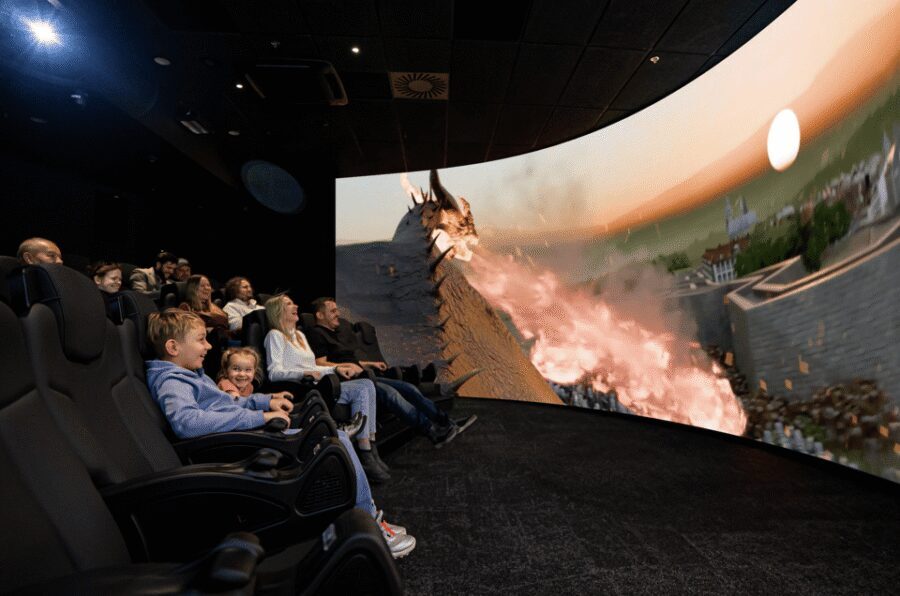
Then comes the 5D cinema experience, and it’s the most “event-like” piece of the museum. In plain terms: you watch a screen, and the production adds physical effects that aim for adrenaline. For many families, this is the part kids remember most.
Why it’s worth it: it changes the rhythm. The interactive exhibits are active and hands-on. The 5D show is immersive in a sensory way, and it gives your brain a break between the themed history rooms.
Important caution, though. The museum specifically restricts entry for people who have epilepsy, claustrophobia, or heart disease. And you should take that seriously. The 5D environment can involve intense sensory input and tight-feeling spaces, so if you’re sensitive, it may not be the right choice even if you’re otherwise curious.
Also, the activity is listed as not suitable for pregnant women. If that applies to you or your group, skip it for safety.
Price and Timing: Is $18 Worth It?
At about $18 per person, this museum sits in the “reasonable for a short, experience-based stop” category. You’re paying for three things: interactive exhibits, a dedicated 5D cinema segment, and themed scenes built around specific Prague history topics.
Because the visit is about 1 hour, the cost-to-time ratio works well for families. You can fit it into a day without losing the whole afternoon. It’s also a smart choice if you’re doing a classic Prague sightseeing day and want something educational that doesn’t require high stamina.
Value-wise, it’s especially strong when:
- you’re traveling with kids who need movement and quick payoff
- you’re taking a school group and want a structured, history-based outing
- you’re an adult who likes history but doesn’t want another long museum with endless reading
The only time it feels less like a deal is if you’re expecting deep, lecture-level coverage of everything included. This is more about memorable scenes than exhaustive explanations.
Who This Museum Fits Best: Families, Schools, and First-Time Visitors
Back In Time Prague is designed for families and schools, and it shows. The minimum child age is 6 years, and entry is restricted to people taller than 110 cm (3 ft 6 in). That tells you the exhibits and the 5D portion likely depend on participants being big enough for the space and effects.
Wheelchair access is listed, which is a plus for planning. If you’re bringing a stroller, plan carefully because some museum-style areas can be tight, and you may need to manage space in rooms and waiting areas.
For kids, the combination of interactive scenes and the 5D cinema tends to keep attention. For adults, it’s a quick reset button: you get a guided sense of Prague’s turning points without needing to already know the entire storyline.
If you’re a traveler who prefers quiet, text-based museums with lots of reading time, this might feel like a shorter stop than you want. But if you like energy, variety, and leaving with names and stories you can connect to the city, it’s a strong fit.
Should You Book Back In Time Prague?
Book it if you want a high-energy, family-friendly way to understand Prague history in under two hours, with interactive exhibits and a 5D finale. It’s also a good choice when you’re in a hurry, when kids are part of the plan, or when you’d like a starting point for deeper sightseeing later.
Skip it (or choose another option) if you need long-form historical explanation, because the format is built to stay short. And don’t book if any of the stated restrictions apply—especially epilepsy, claustrophobia, heart disease, or pregnancy.
If you’re on the fence, think about your goal. If your goal is context and a memorable first pass through stories like Libuše, the golem, Charles IV, the astronomical clock, and the Prague Uprising, this museum is easy to justify.
FAQ
How long is the Back In Time Prague experience?
It lasts about 1 hour.
What’s included in the ticket?
You get interactive exhibits plus a 5D cinema experience, along with themed parts such as the time machine, legend of the golem, Libuše founding of Prague, King Charles IV, the hall of fame, the astronomical clock story, and the Prague Uprising.
What are the age and height limits?
Children must be at least 6 years old, and visitors must be taller than 110 cm (3 ft 6 in).
Who should not enter?
Entry is prohibited for people suffering from epilepsy, claustrophobia, or heart disease. It is also listed as not suitable for pregnant women, and children under 6 years.
Is the experience wheelchair accessible?
Yes, wheelchair accessibility is listed.
What’s the cancellation policy?
You can cancel up to 24 hours in advance for a full refund.