REVIEW · OLD TOWN PRAGUE
Prague: Highlights Walking Tour to the German embassy 1989
Book on GetYourGuide →Operated by David Klaus Travel Manager Service Prag · Bookable on GetYourGuide
Prague’s politics, on foot. This walking tour links the city’s biggest sights with the dramatic story of communism, refugees, and the 1989 Iron Curtain fall in Central Europe. I love how it threads together places like the John Lennon Wall and the Charles Bridge area, so you’re not just seeing landmarks—you’re seeing how people protested, hoped, and demanded change.
Two things really make this experience land: first, the focus on the German Embassy 1989 moment, including the balcony tied to Hans-Dietrich Genscher’s famous speech; second, the way the route pairs famous Prague views with the personal stories around Jan Palach. One drawback: it’s a steady walking tour (about 150 minutes) and it’s not suitable for people with mobility impairments, so comfy shoes and realistic pacing matter.
In This Review
- Key Highlights Worth Your Attention
- German Embassy 1989: Why This Walk Feels Different
- Meeting at Charles University Law School and Getting Oriented
- Charles Bridge and the Charles Bridge Area: Photos, Views, and Setup
- Josefov and the Old Jewish Cemetery: Prague Beyond the Main Streets
- Jan Palach Square: Personal Sacrifice in 1968
- Velvet Revolution Memorial: The Protest-to-Change Bridge
- John Lennon Wall: Art as Protest You Can Walk Around
- Wenceslas Square and Prague National Museum: The Stage for Big Moments
- Malostranské Square and the Final Walk to the German Embassy
- The Balcony Story: Hans-Dietrich Genscher at the German Embassy (Outside Only)
- Price and What You Get for $32 (150 Minutes, Guide Included)
- Language, Pace, and Comfort: The Practical Stuff That Changes Your Day
- Who This Tour Suits Best (and Who Might Want Another Option)
- Final Verdict: Should You Book This Prague Highlights Walk?
- FAQ
- FAQ
- How long is the Prague Highlights Walking Tour to the German Embassy 1989?
- What does the tour cost?
- What language is the guide?
- Where do I meet the tour?
- Is hotel pickup included?
- Can I enter the German Embassy building?
- Is this tour suitable for people with mobility impairments?
Key Highlights Worth Your Attention
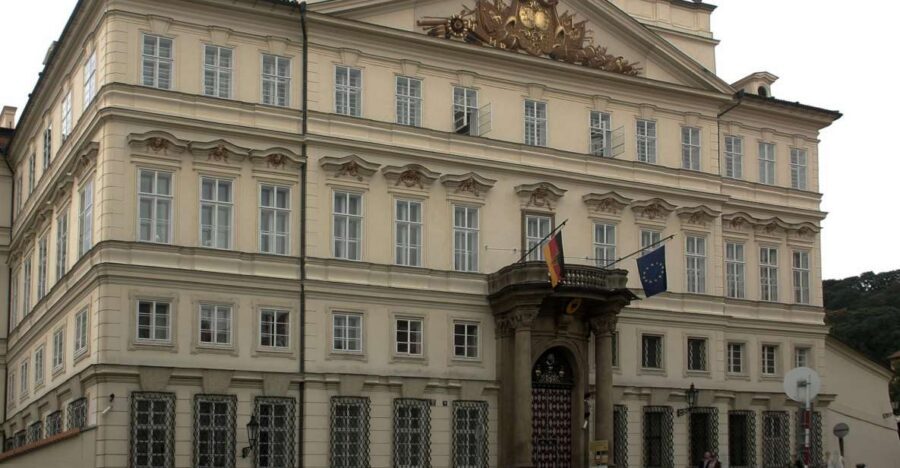
- Hans-Dietrich Genscher’s balcony moment outside the German Embassy area, tied to 1989 events
- Charles Bridge walking time with major city views and story-based context
- John Lennon Wall as a living protest wall you can stand next to (not just read about)
- Jan Palach Square + Velvet Revolution Memorial for the human side of political history
- Josefov and the Old Jewish Cemetery stops that deepen Prague beyond the postcard view
- Licensed German-speaking guide who answers questions (a big deal on tours like this)
German Embassy 1989: Why This Walk Feels Different
Most Prague walks are either about pretty streets or famous buildings. This one adds a third layer: political memory you can actually point at. You start in the historic center and keep moving across the city’s recognizable zones—Old Town, Lesser Town, and the former Jewish ghetto—while your guide puts 20th-century events into plain, place-based context.
The headline is the German Embassy 1989 story. You get to see the embassy building from the outside and hear why that specific location mattered during the refugee crisis when East German citizens fled toward the West. The tour also stops for the emotional and symbolic sites tied to Jan Palach in 1968 and the protest energy captured in the John Lennon Wall.
If you care about modern European history, this is one of the more direct ways to connect it to Prague streets. And if you don’t, the tour still works because the landmarks are real and the timeline is explained as you walk, not dumped in a lecture.
Meeting at Charles University Law School and Getting Oriented
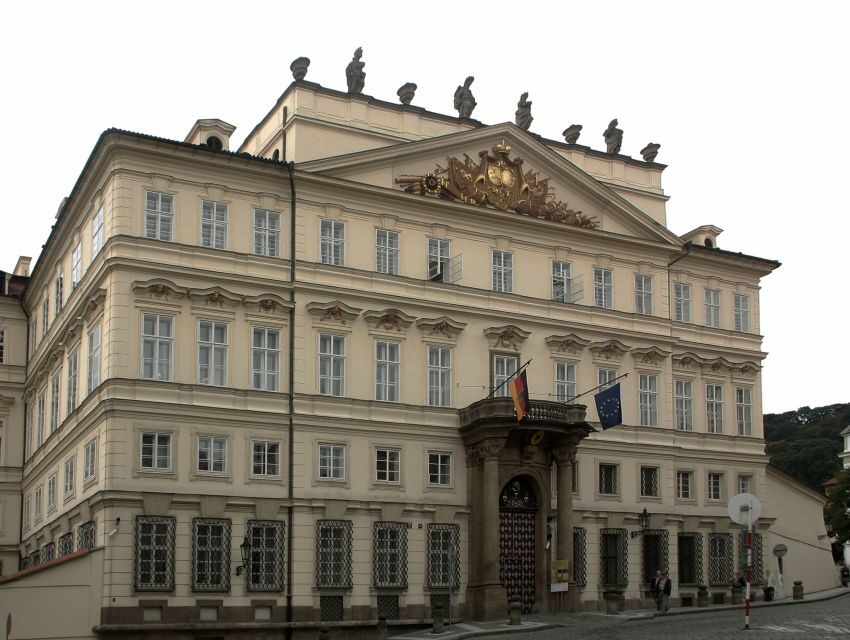
You’ll meet in front of the Faculty of Law (Charles University). If you’re using the metro, get off at Staroměstská—it’s about 550 meters away. Another option is tram 17 and getting off at Pravnická Fakulta.
This matters more than you’d think. Starting at a central university area helps you ease into the walk with good orientation before you hit the Old Town sights and the memorial points. Also, the tour language is German, so this is a great fit if you’re comfortable following a German-speaking guide. If German isn’t your strength, you’ll still see a lot of key locations, but you’ll miss part of why the route is so compelling.
Charles Bridge and the Charles Bridge Area: Photos, Views, and Setup
The early part of the tour begins with a short photo stop around Čech’s Bridge (about 10 minutes). It’s not the long, signature bridge moment yet, but it’s a useful warm-up. You’re getting your bearings, and your guide is setting the tone: Prague is going to be more than scenery on this walk.
Then later, you cross into the main Charles Bridge segment (about 15 minutes) with photo stops and guided walking. This is one of those places where the location does half the work for you. From the bridge you get classic city views, and—more importantly in this tour—you’re walking through the urban geography that ties into the embassy story you’ll reach near the end.
A practical note: Charles Bridge is busy in many seasons. Here you’ll be doing guided moments and short pauses rather than lingering at every viewpoint, so keep your attention on what your guide points out.
Josefov and the Old Jewish Cemetery: Prague Beyond the Main Streets
One of the strongest values here is that the route doesn’t stop at the headline “greatest hits.” You move into Josefov (the former Jewish quarter area) and spend time near the Old Jewish Cemetery with a photo stop (about 10 minutes).
Even when you only have a short stop, this kind of location changes how you read the city. Josefov is tied to Prague’s layered past, and the cemetery area adds weight. It gives you a sense of continuity—people living in this city, dealing with pressure and change long before 20th-century politics shaped the headline era of the tour.
What I like: these stops feel like respectful context-setting, not just ticking boxes. What you might watch for: because some stops are brief photo moments, you’ll want to move quickly, ask one or two focused questions, and let the guide steer you toward what to notice.
Jan Palach Square: Personal Sacrifice in 1968
Next comes Jan Palach Square with a photo stop and guided time (about 10 minutes). This is where the tour’s tone shifts into personal history. You learn about Jan Palach as a student at the Faculty of Philosophy, and how his fate connects to the Prague Spring era in 1968.
This is one of the tour’s emotional centers. Political history can turn abstract fast, but Palach’s story is presented as something painfully human—someone with a place in Prague’s streets and public memory. If you’ve only ever read about 1968 in broad strokes, standing near the square helps translate it into real geography.
If you’re sensitive to heavy topics, this is also the part where you might want to slow your thinking and take in the meaning rather than rushing for photos. It’s brief on paper, but the subject has gravity.
Velvet Revolution Memorial: The Protest-to-Change Bridge
After Jan Palach Square, you head to the Velvet Revolution Memorial with a photo stop and guided time (about 15 minutes). This is where the story moves forward from the 1968 pressure of the Prague Spring era toward the later break that helped change Central Europe’s political map.
The “velvet” label can make people think it was all gentle. The memorial stop is your reality check. You’ll learn about the rise and fall of communism in the region and how those political turns connected to refugee movement toward the West.
For me, the memorial works because it’s not just facts—it’s framing. By this point, you’ve already heard about Palach and the symbolic weight of protest. Now you see how that atmosphere can translate into a larger societal shift.
John Lennon Wall: Art as Protest You Can Walk Around
Then you reach the John Lennon Wall (about 10 minutes). This is the stop people often expect to be “just cool street art.” The tour nudges it into a different category: protest and memory.
You’ll get a guided look and time for sightseeing, including time to register the homage and the spirit of dissent that the wall represents. Even if you’ve seen photos online, standing there in person changes the feeling. It looks more like a public conversation than a single artwork.
One practical consideration: the wall area can attract crowds. In a short stop like this, don’t try to photograph everything. Focus on what your guide points out and let that set your priorities.
Wenceslas Square and Prague National Museum: The Stage for Big Moments
You move onward to Wenceslas Square for a stop and guided sightseeing (about 15 minutes). Nearby, you also have a Prague National Museum photo stop (about 5 minutes).
This area is a natural stage for history because it’s a major public space. In this tour, it’s also a structural checkpoint. You’re walking across the city while the guide keeps the timeline moving: from 1968 pressure and symbolic protest, toward 1989 change and the refugee crisis that brought desperate people to the West German Embassy area.
Wenceslas Square is also a spot where your sense of Prague’s scale comes back. It can feel like the city’s “center of gravity.” That’s helpful because the later embassy moment can feel like a small, specific place until the guide connects it to a larger wave of events.
Malostranské Square and the Final Walk to the German Embassy
You’ll have a photo stop at Malostranské Square (about 5 minutes). Then you continue on foot for about 10 minutes, working your way toward the embassy area.
This is an important stretch. By the time you’re heading there, you’ve already heard the storyline: the Iron Curtain context, the refugee crisis, and the balcony moment tied to Hans-Dietrich Genscher. The walk helps you arrive mentally prepared, not just physically nearby.
And here’s the key detail: the German Embassy interior is not open to the public. You’re visiting the area from the outside, and that’s it. Still, the exterior view and the balcony story are the point, and the tour spends time so you’re not left staring at a building wondering why it’s special.
The Balcony Story: Hans-Dietrich Genscher at the German Embassy (Outside Only)
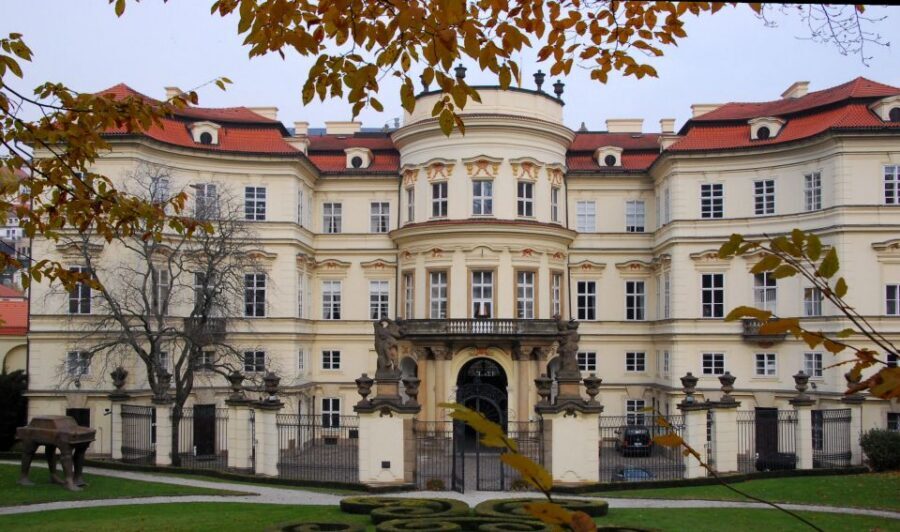
Finally, you reach the Embassy of Germany, Prague for a photo stop and guided sightseeing (about 10 minutes). This is the moment that gives the tour its title and its emotional pull.
You’ll learn about the balcony where Hans-Dietrich Genscher made his famous speech, and why East German citizens fleeing the system looked to the embassy area for a path toward the West. The guide also explains how people’s desperation and hope met a specific political turning point in 1989.
A review-based detail I think you’ll appreciate: one guest described how returning to the embassy garden/balcony area brought back vivid memories from decades earlier—an emotional kind of “that happened here” feeling. That matches what this stop does well. You can see the location, you connect it to the story, and you leave with a stronger sense of place.
Another review-based note: a guest praised the guide, David, for giving clear answers to questions. That’s worth factoring in. On a tour that revolves around political events, having a guide who can clarify the timeline is genuinely valuable.
So what should you do during this stop? Watch for the specific spots your guide points out, then take a slow look at the building outside. Because you can’t go in, your attention matters even more.
Price and What You Get for $32 (150 Minutes, Guide Included)
At $32 per person for about 150 minutes, this tour is priced like a mid-range walking experience, and the value is in the structure. You’re paying for three things:
- A licensed German-speaking guide to connect the sites to the political story
- A curated route that covers major center areas like Old Town and Lesser Town while staying story-focused
- Access to a short, timed route that keeps you moving efficiently without turning it into a long day of wandering
It does not include food and drinks, and there’s no hotel pickup unless you opt for it. So if you’re planning this as one of your first activities in Prague, I’d budget a snack break before or after, especially if you tend to get hungry while walking.
For $32, the biggest “value test” for you is this: do you want history with a route plan, or do you prefer to roam on your own? If you want the route and the explanations, it’s a solid deal. If you only want postcard sights, you might feel like the balance is heavier on politics than you expected.
Language, Pace, and Comfort: The Practical Stuff That Changes Your Day
This is a German-language tour. The guide is live, and it’s a great option if you can follow German discussions about modern history. If you’re not fluent, you may still enjoy the physical places, but the context will likely be thinner.
It’s also not suitable for mobility impairments, which usually means you should assume a walking route with uneven surfaces. Prague can be cobblestony and curb-y, so I’d come prepared with shoes you trust.
Finally, group size can be private group available, which is worth considering if you want more time at the balcony/embassy storytelling moments or if you have questions you’d rather ask without feeling rushed.
Who This Tour Suits Best (and Who Might Want Another Option)
This tour is a strong fit if you want Prague through the lens of the 20th century—especially the transition from communist rule and the 1989 turning point.
It’s also a good choice if you like tours that connect multiple famous spots—Charles Bridge, the John Lennon Wall, Wenceslas Square—with one clear story thread. You’ll get a sense of how different corners of Prague carry different layers of memory.
Who might skip it? If you want a fully relaxed, minimal-history walk, this one is more serious. And if you can’t do the walking, the route won’t work well.
Final Verdict: Should You Book This Prague Highlights Walk?
I think you should book this tour if you enjoy the intersection of place and history. The German Embassy 1989 balcony story is the hook, but what makes it worth your time is the way the guide builds context from Jan Palach’s 1968 moment, through protest symbols like the John Lennon Wall, into the later political shift and refugee crisis.
You’re walking for about 150 minutes with a German-speaking licensed guide, and you’ll see a lot of major Prague sights without spending the whole day hopping between buses. If German language isn’t a problem for you, or if you’re happy with a tour where context is the main product, this is a very good use of a half-day in Prague.
FAQ
FAQ
How long is the Prague Highlights Walking Tour to the German Embassy 1989?
The tour lasts 150 minutes.
What does the tour cost?
The price is $32 per person.
What language is the guide?
The guide is German-speaking.
Where do I meet the tour?
You meet in front of the Faculty of Law. The address given is nám. Curieových 7, 116 40 Old Town.
Is hotel pickup included?
Hotel pickup and drop-off are not included, but pickup is optional in Prague 1, 2, 3 or near the metro station Můstek, or at the Faculty of Law.
Can I enter the German Embassy building?
No. The interior of the embassy is not open to the public; you will see it from the outside.
Is this tour suitable for people with mobility impairments?
No, it is not suitable for people with mobility impairments.